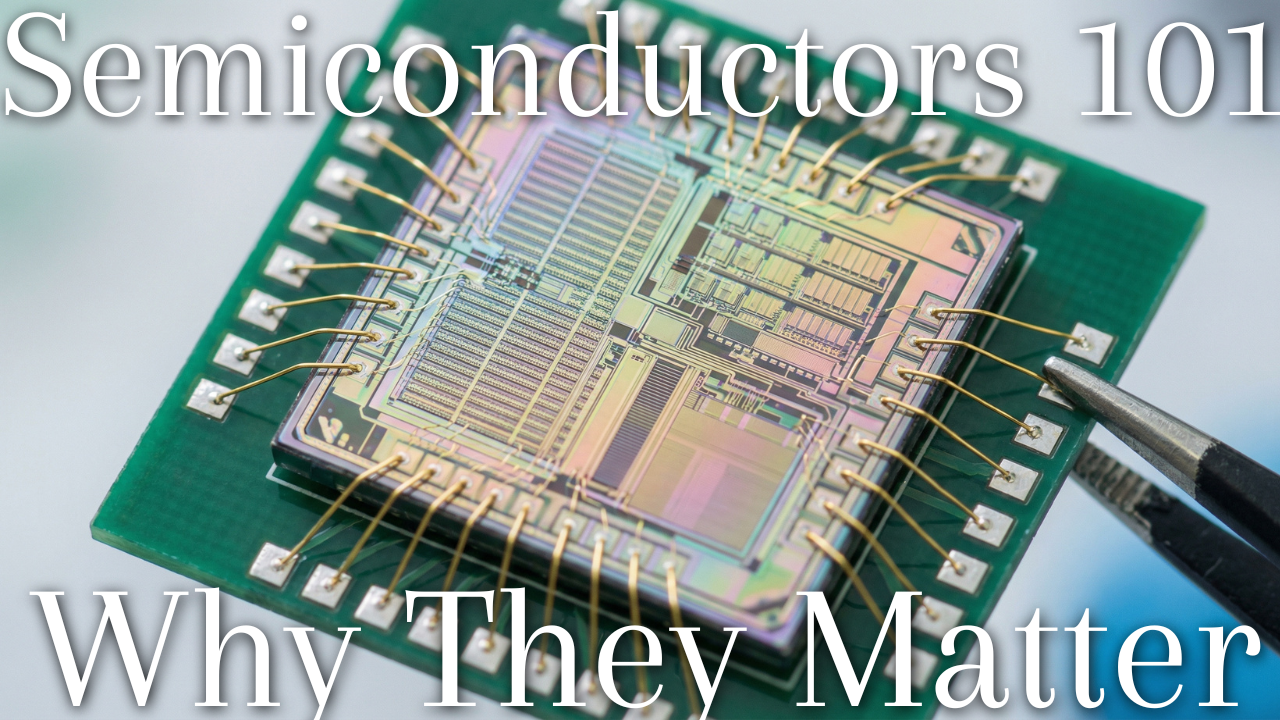
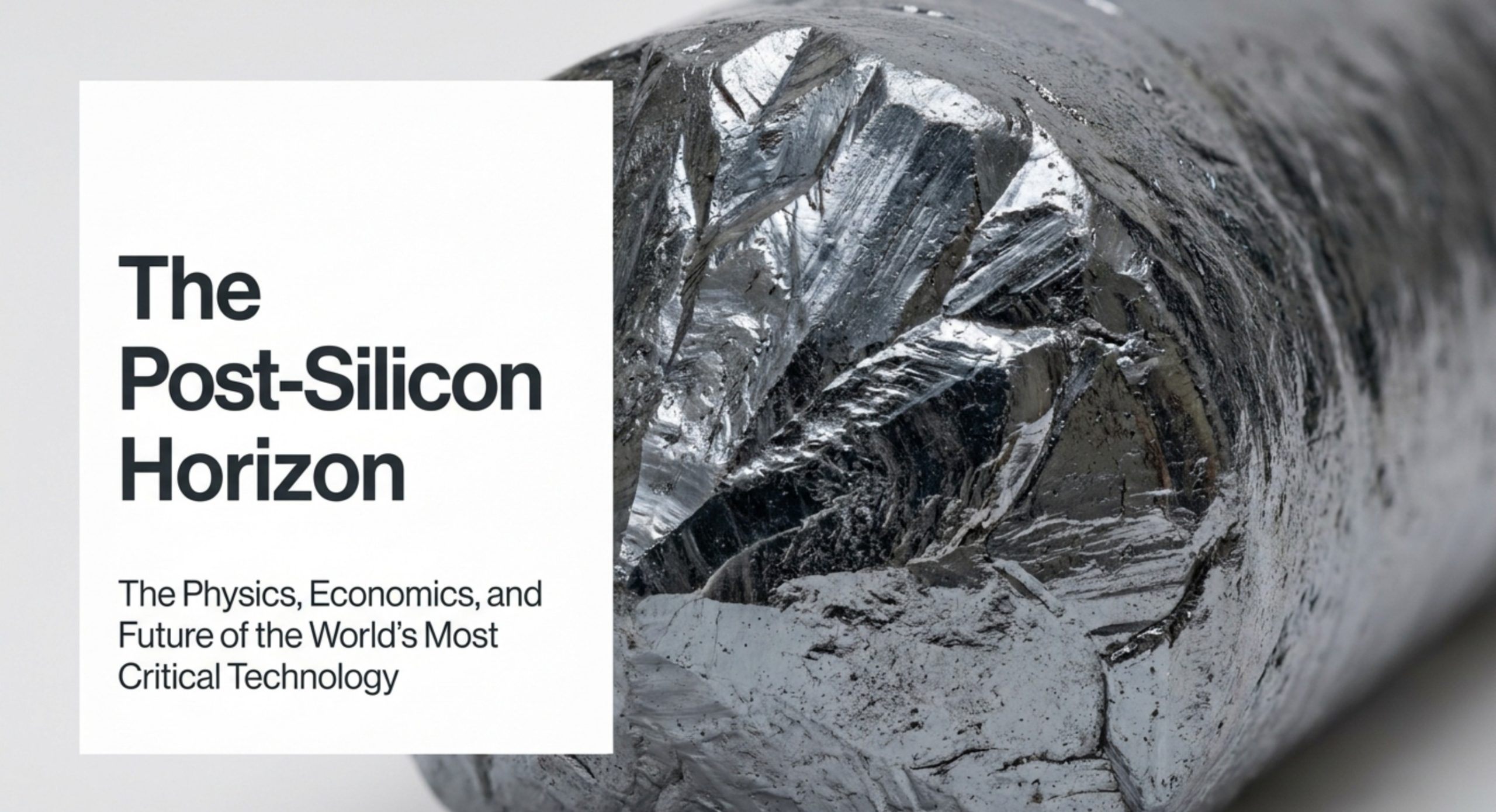
Semiconductors power virtually every electronic device in the modern world — from smartphones to data centers. This article introduces three foundational topics from the complete version: what semiconductors are, how they are made, and the scale of the global market.


What Is a Semiconductor: The Essential Technology Inside Every Device
The heart of technology, which has become an inseparable part of modern life, is the component that plays a central role in this field. It is incorporated into all kinds of electronic devices, from smartphones and computers to automobiles and home appliances, playing an extremely crucial role in processing and storing information, and even controlling power. Understanding the principles of how this component works and the benefits it brings to our society is essential knowledge for living in the future.
The most fundamental role of this technology is to control the flow of electricity. It gets its name because it is a material with properties intermediate between conductors, which easily conduct electricity, and insulators, which do not conduct electricity. By utilizing this special property, it becomes possible to treat electrical signals as digital data of 0s and 1s, turning them on and off. By performing this simple on/off switching at an astounding speed of billions of times per second, advanced calculations and complex information processing are achieved. For example, even inside the device you are using to read this article right now, countless microscopic switches are changing instantly, silently performing calculations behind the scenes to render text and images on the screen.
One of the most surprising features of these components is their extremely microscopic size. Early computers were gigantic machines that took up entire rooms, but thanks to technological advancements, billions of circuits are now packed into chips small enough to fit on your fingertip. This dramatic miniaturization made the birth of smartphones — portable, high-performance computers — possible, and it became the driving force behind the IoT era, where every object is connected to the internet. In modern society, its compactness, allowing it to be embedded in any device, coupled with the overwhelming performance that backs it up, can be said to be the greatest weapon of this technology.
Furthermore, when looking at what semiconductors are used for, one is amazed by the breadth of their applications. In everyday life, they are active in all aspects of home appliances, such as temperature control in refrigerators and air conditioners, eco-mode control in washing machines, and high image quality in televisions. Expanding our view, they function as the very infrastructure supporting modern civilization, from advanced diagnostic imaging equipment in medical settings and massive server networks processing huge amounts of financial data, to autonomous vehicles and even space exploration. They have permeated every corner of society, and it is no exaggeration to say that modern life could not function for a single day without them.
Supporting this wide range of applications are diverse designs and manufacturing processes optimized for specific uses. Components specialized for each purpose are being developed day and night, such as memory for storing information, processors for performing calculations, and sensors for converting physical changes like light and temperature into digital data. In recent years, especially with the rapid development of artificial intelligence, the demand for dedicated chips capable of processing massive amounts of data quickly and efficiently has surged, accelerating the pace of technological innovation even further.
Semiconductor Manufacturing and the Silicon Wafer: The Foundation of Every Chip
As mentioned earlier, these microscopic circuits fundamentally support our lives, but the process by which they are shaped into practical components is the crystallization of the most precise manufacturing technology humanity has ever achieved. The first step in this manufacturing process, serving as the foundation for everything, is a special disc-shaped material. The final product is completed by building up microscopic circuits — too small to be seen by the naked eye — in multiple layers on top of this foundation.
The material that forms this foundation is generally made from an element called silicon. Silicon is abundant in the Earth’s crust and is a primary component of sand. However, to be used in manufacturing, impurities must be removed to the absolute limit, refining it to an absurdly pure state of 99.999999999% (eleven nines). This ultra-high purity silicon is melted, pulled into a massive single-crystal block (ingot), thinly sliced, and polished to a mirror-like finish. This disc — known as a wafer — is where hundreds or thousands of tiny chips will eventually be cut out from a single piece.
In the manufacturing process, the size of this disc holds extreme importance. The larger the disc, the more chips can be produced in a single manufacturing process, resulting in a significant reduction in the manufacturing cost per chip. Looking back at history, early wafers were tiny, measuring only a few centimeters in diameter, but they have gradually increased in size alongside technological advancements.
A turning point for the industry was the introduction of a larger size. The transition from 6-inch to 8-inch wafers led to a dramatic expansion in area and a leap in production efficiency. Even today, 8-inch production lines continue to operate as the mainstay in many factories. This size boasts a highly stable manufacturing process due to years of accumulated expertise, maintaining overwhelming demand in fields where cost performance and reliability are paramount, such as automotive and home appliance applications.
Furthermore, in cutting-edge factories that require more advanced chips and mass production, a transition to an even larger size was initiated. Moving from 8-inch to 12-inch wafers doubled the area again, enabling the mass production of finer, more complex processors and large-capacity memory. However, as the disc gets larger, the technical difficulty of forming uniform circuits across its entire surface skyrockets. Since even slight temperature changes or the introduction of impurities can cause fatal defects, the ultimate precision is required in controlling the manufacturing equipment and environment.
At the forefront of the industry, research and development are already underway to realize the next-generation standard: an enormous 600mm wafer. However, achieving this level of gigantism requires overcoming hurdles close to physical limits across every manufacturing step, making the barrier to realization extremely high.
Semiconductor Market Size: The Global Industry Powering a Trillion-Dollar Economy
As the foundation of all aspects of society is supported by the extraordinary evolution of technology, the economic influence of this industry has swollen to an unprecedented scale. It is no longer a market that enriches only a few electronic component manufacturers; it has transformed into a strategic commodity capable of shaking the foundations of national economies and national security. As the digitization of the global economy becomes an irreversible trend, the influx of capital into related industries and the momentum of their market expansion are staggering.
According to future market forecasts published by international research institutions, the total sales of the global industry are projected to reach approximately one trillion dollars within the next decade. The drivers of this incredible growth are too numerous to list, ranging from the construction of massive data centers for cloud computing and the proliferation of smartphones to the electrification of automobiles and the explosive demand for artificial intelligence. In a future where everything is connected to the internet, semiconductors have transcended their status as the modern “rice of industry” to become the indispensable “blood of industry.”
A similarly massive wave is occurring in Japan, where huge investment plans jointly led by the government and corporations are underway. Particularly drawing attention is the development of new production hubs centered in the Kyushu region. According to estimates by a major financial institution, the new economic effects generated over the next few years by related infrastructure development and the concentration of supply chains will be extremely large, with large-scale projects expected to dramatically revitalize regional employment and economies. The influence of this industry has grown so massive that it even sways the economic policies of nations.
However, this industry does not just grow constantly; it has one major characteristic. That is its nature of undergoing significant fluctuations in the balance of supply and demand every few years, repeating waves of boom and bust. This unique market cycle is widely recognized across the industry. Periods when new technologies emerge and demand for replacement products explodes, causing supply to fall behind, are historically followed by periods when factories simultaneously ramp up production, resulting in flooded inventory and crashing prices.
Based on these historical empirical rules, related companies and the industry as a whole make large-scale business investments while constantly staying alert to when the next peak in demand will arrive, or when an adjustment phase will begin. How to ride this steep wave, capitalize on the economic boom, and seize supremacy in next-generation technology has become the most critical management challenge for surviving global competition.
Topics covered in the complete version:
- The full fabrication process: lithography, etching, via structures, and packaging
- Miniaturization history from 350nm to sub-1nm, and next-generation materials (SiC, GaN, synthetic diamond)
- Major players, foundry dynamics, and capital investment trends
- Supply chain geopolitics and near-future shortage risk
- Emerging technologies: quantum computing, silicon photonics, neuromorphic chips, DNA storage, and space mining

コメント